· Fuzal
Building Cadence Combat: a visual tour of my VR boxing prototype
A look inside Cadence Combat: the VR training studio, custom glove and pad assets, comfort controls, and graded hits with expanding shockwaves.
Cadence Combat is my work-in-progress VR boxing game, built in Unity. It combines rhythm-based target training with a dedicated boxing space, custom glove and pad assets, and feedback designed to help players improve one strike at a time.
This is a look at the whole project: the room, the assets, the interface, and the prototypes that led to the current design.
!Cadence Combat training studio with teal and coral focus pads approaching the player
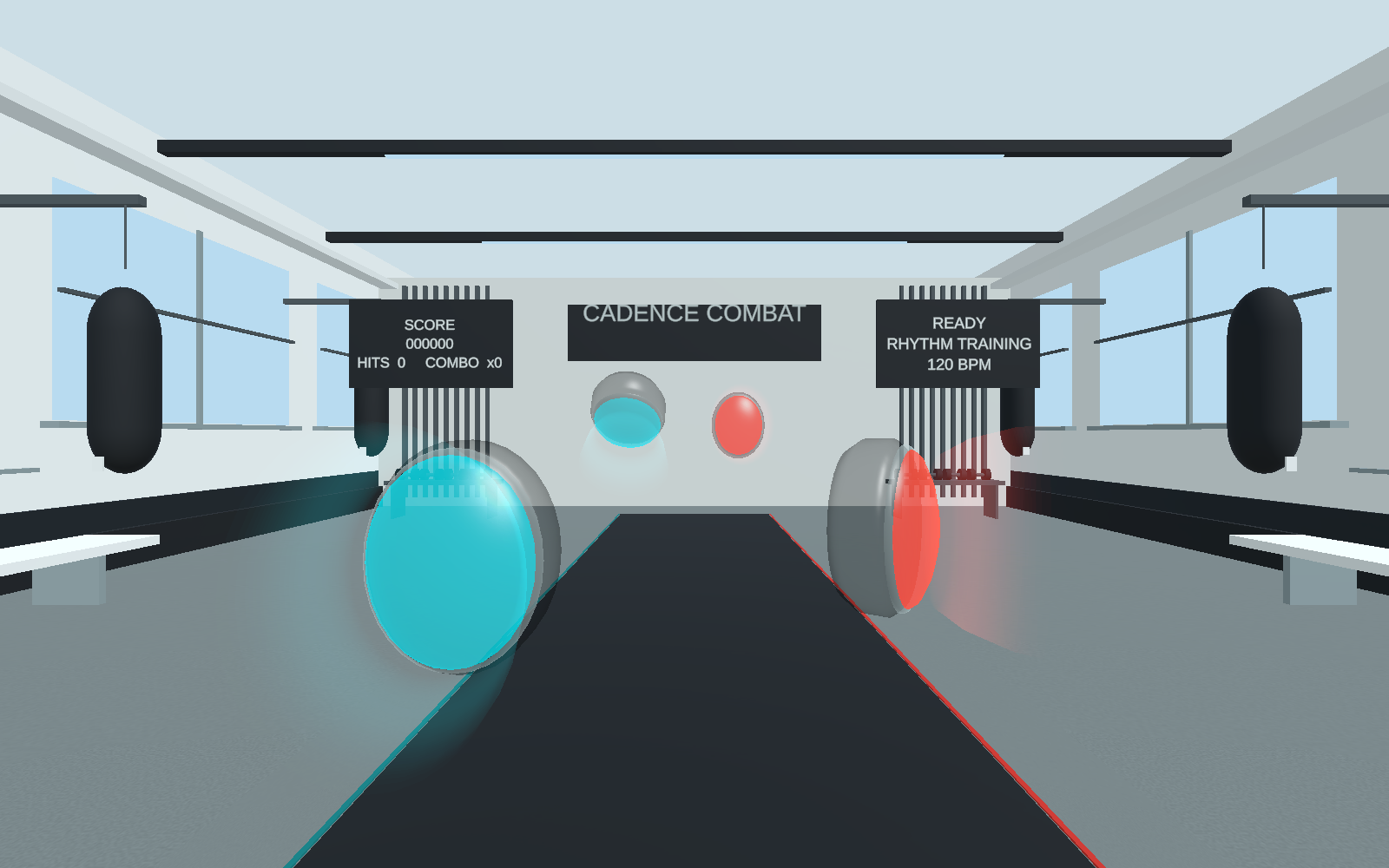
*Unity-rendered player-view preview of the training studio. The images in this article are development captures and asset renders, rather than a recording of a finished public release.*
A training space with room to breathe
The studio uses a restrained palette: graphite equipment, a neutral floor, pale walls, and daylight along the sides. Teal and coral mark the target identities and edges of the training lane. The idea is to make the approaching pads easy to pick out while keeping the surrounding space readable.
Punching bags, benches, weights, and acoustic fins give the room a recognizable gym setting. The central corridor stays open, with score and rhythm panels visible ahead. Those details matter in VR, where the environment surrounds the player rather than sitting behind a small game window.
From prototype to focus studio
The earlier studio already had the main ingredients: a long training lane, separate score and rhythm panels, and colored targets. Its layout was much simpler, with large bright display areas and fewer environmental details.
!Earlier Cadence Combat studio prototype with a simple training lane and large score panels
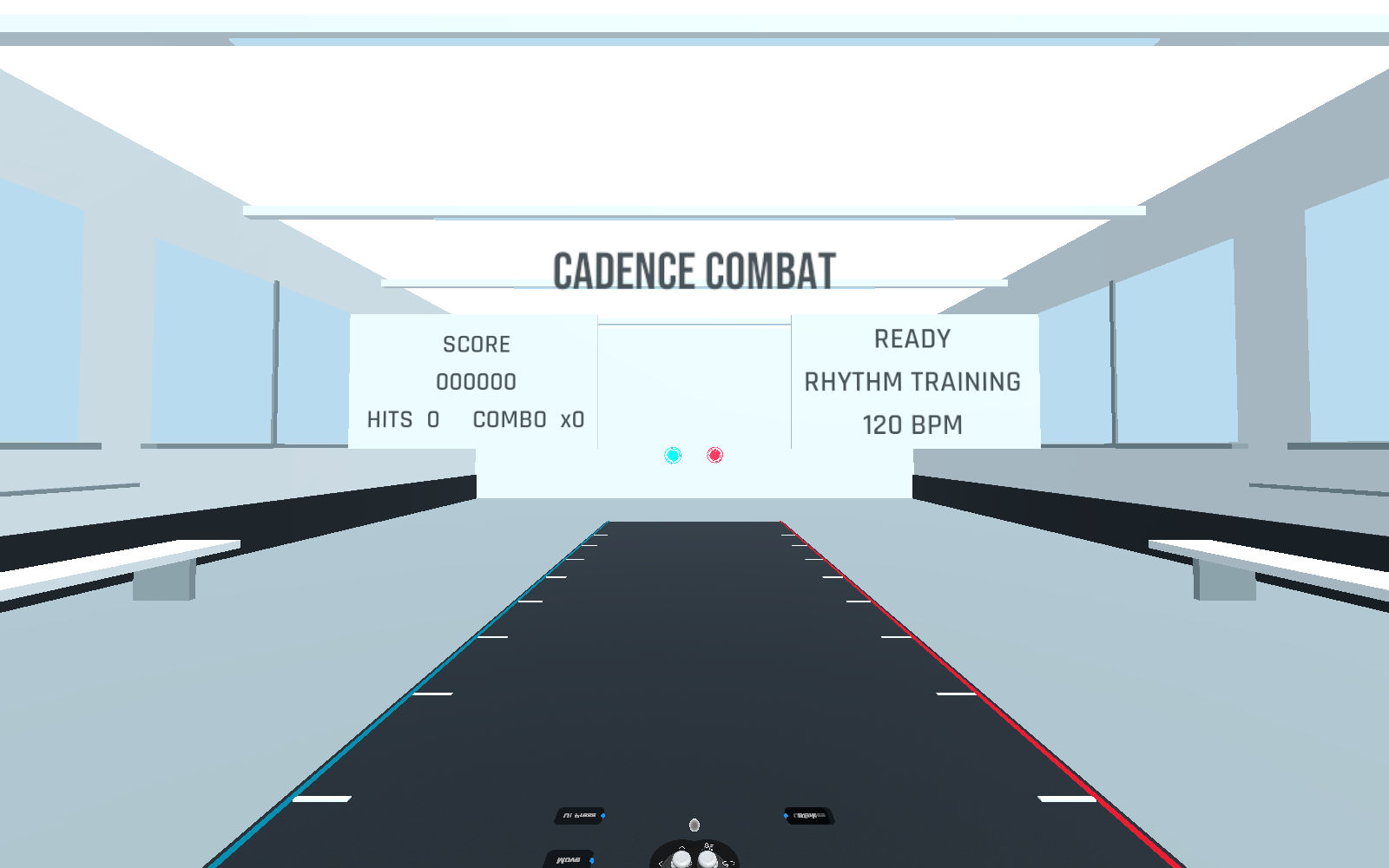
*Earlier prototype capture. It documents a previous design, not the current appearance.*
The newer room keeps that clear central layout while giving the equipment, lighting, and target surfaces more definition. Keeping these earlier images is useful: they make the project's progress visible, including the decisions that changed along the way.
Custom gloves for controller play
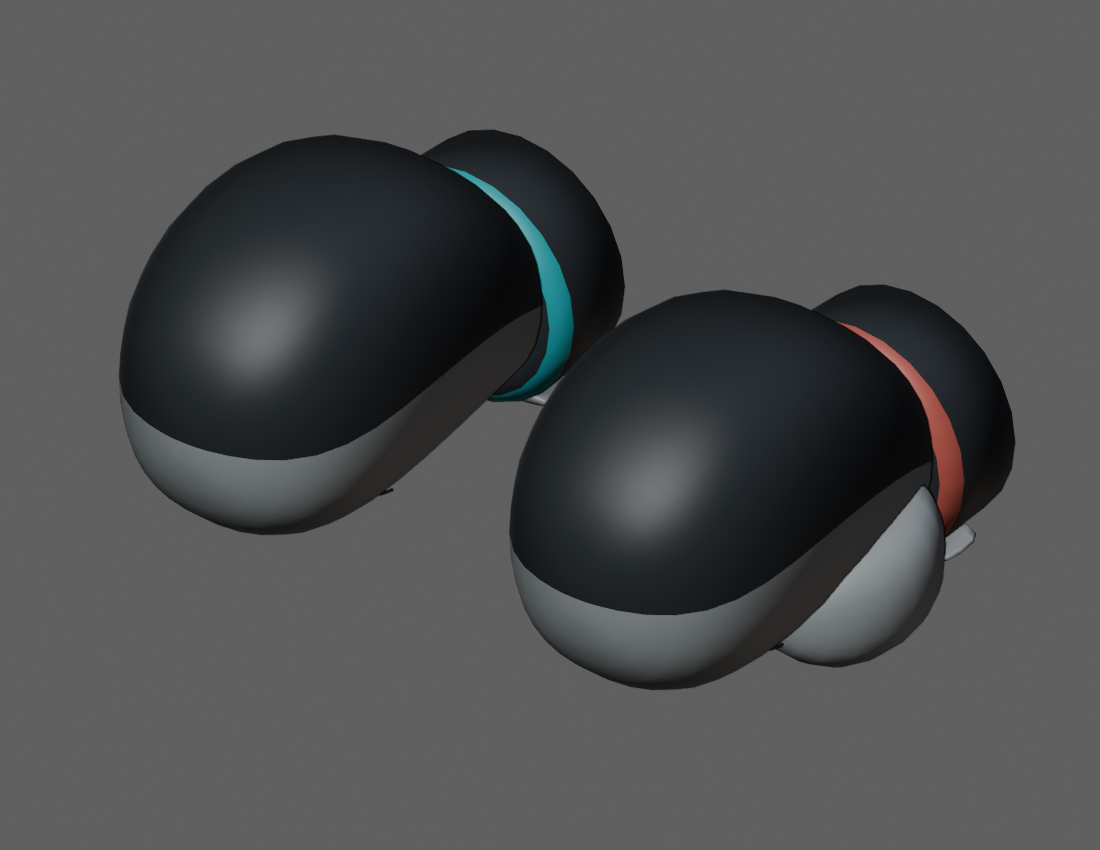
Controller play uses a pair of custom boxing gloves modeled in Blender and imported into Unity. They have rounded knuckles, a defined thumb, a wrist opening, and teal or coral accents to distinguish the hands.
!Angled Blender render of the custom Cadence Combat controller gloves
!Front view of the Cadence Combat glove assets
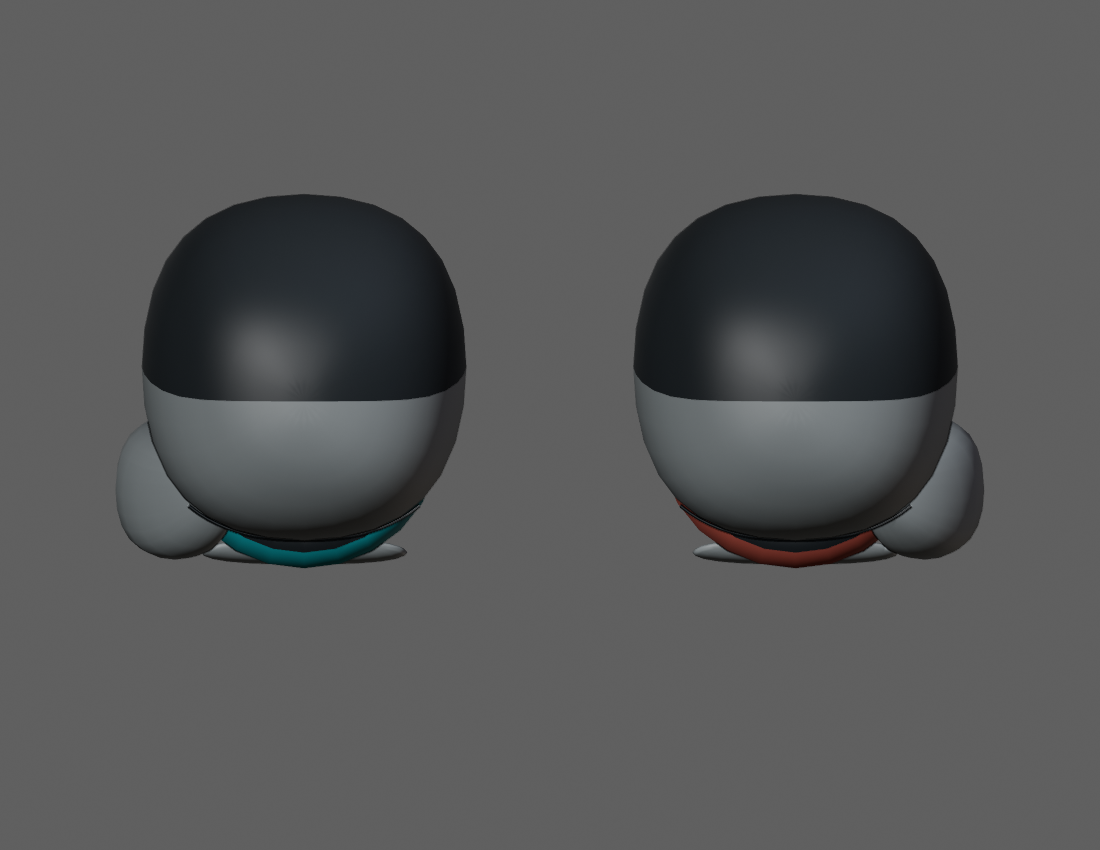
The glove artwork is separate from the hit-detection proxy. This lets the visible model be positioned around the controller grip while the game handles contact through its own collision shape.
Bare-hand tracking uses the tracked hand visuals instead of placing an extra controller glove over them. Switching input sources resets motion sampling so the change in pose does not count as a punch.
Pads that communicate the punch
The targets are rounded focus mitts with domed strike faces, thin rims, and graphite backings. Their orientation changes with the technique: straight punches face the player, hooks present an angled face, and uppercuts use a downward-facing surface.
!Cadence Combat focus-pad assets showing straight, hook, and uppercut orientations
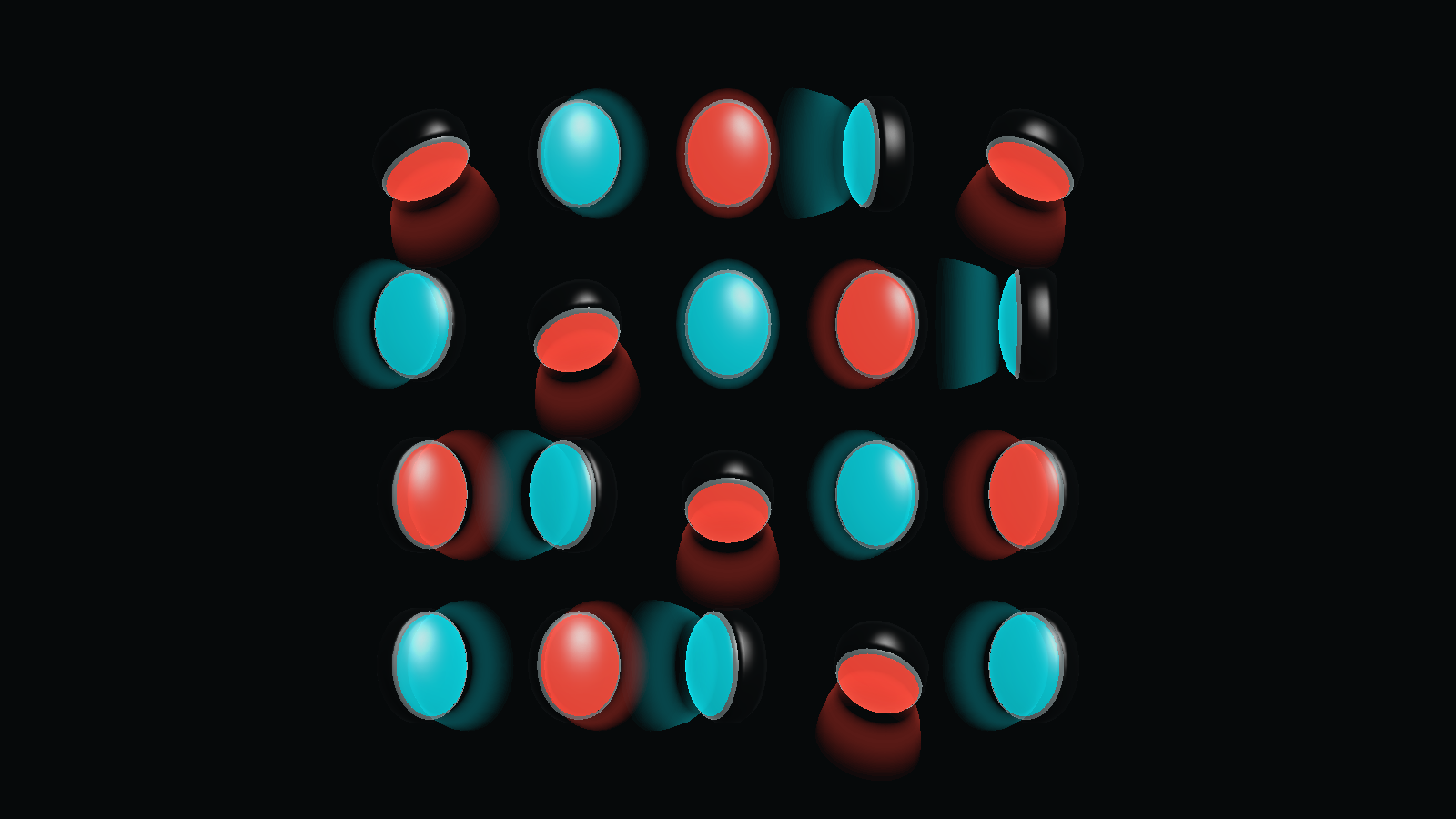
The face glow follows the direction of the pad. It uses lightweight visual geometry rather than a separate real-time lamp for every target. The goal is to make the strike surface visible while keeping the rendering work bounded.
Setting up a session
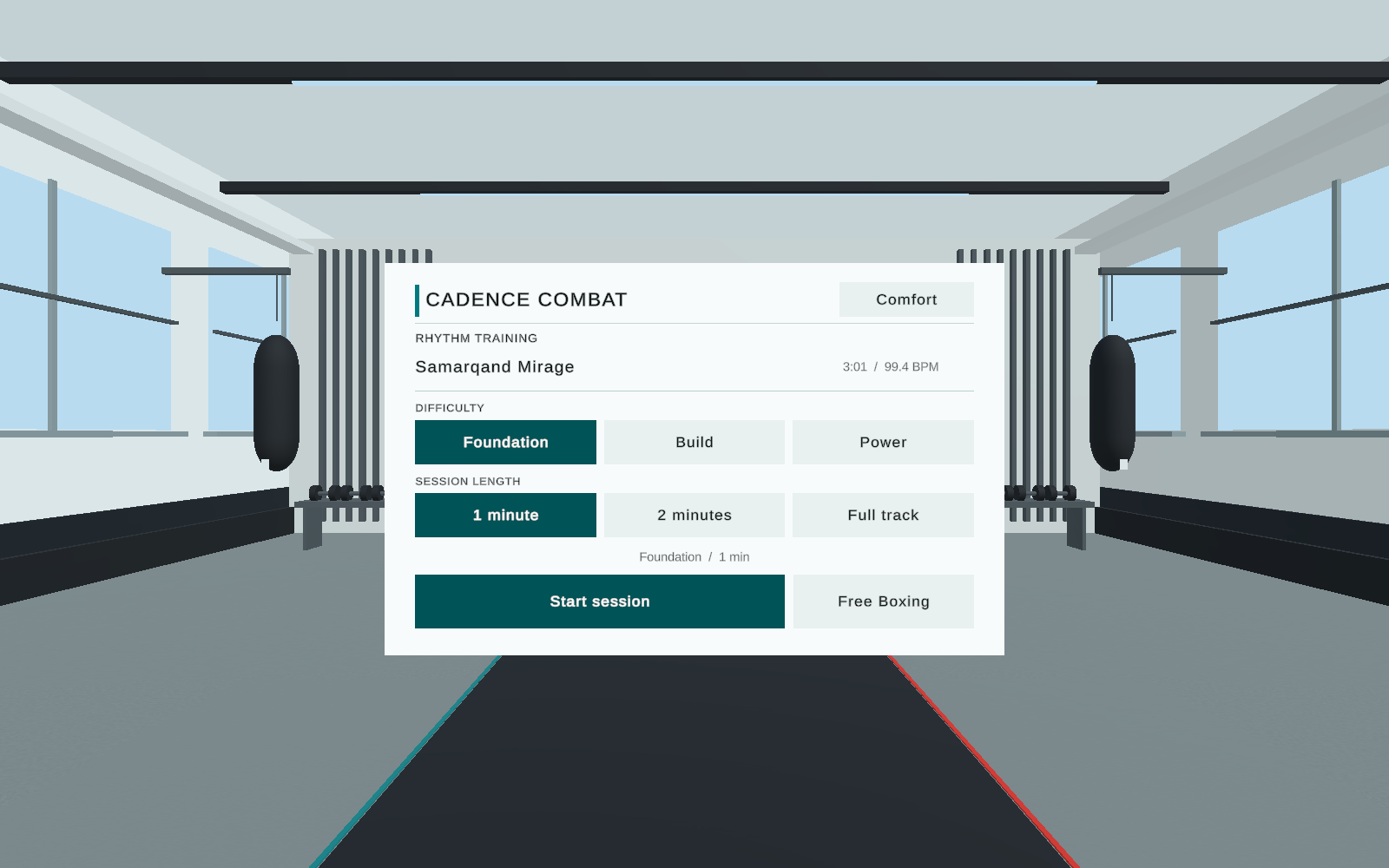
The session menu brings difficulty and duration together in one view. Players can choose Foundation, Build, or Power, then select a short session or the full track. A free-boxing option provides another route into training.
!Cadence Combat session menu showing difficulty and session-length choices
The comfort page includes standing or seated play, standard or compact reach, both hands or a single hand, assisted or technique-based hits, and height calibration.
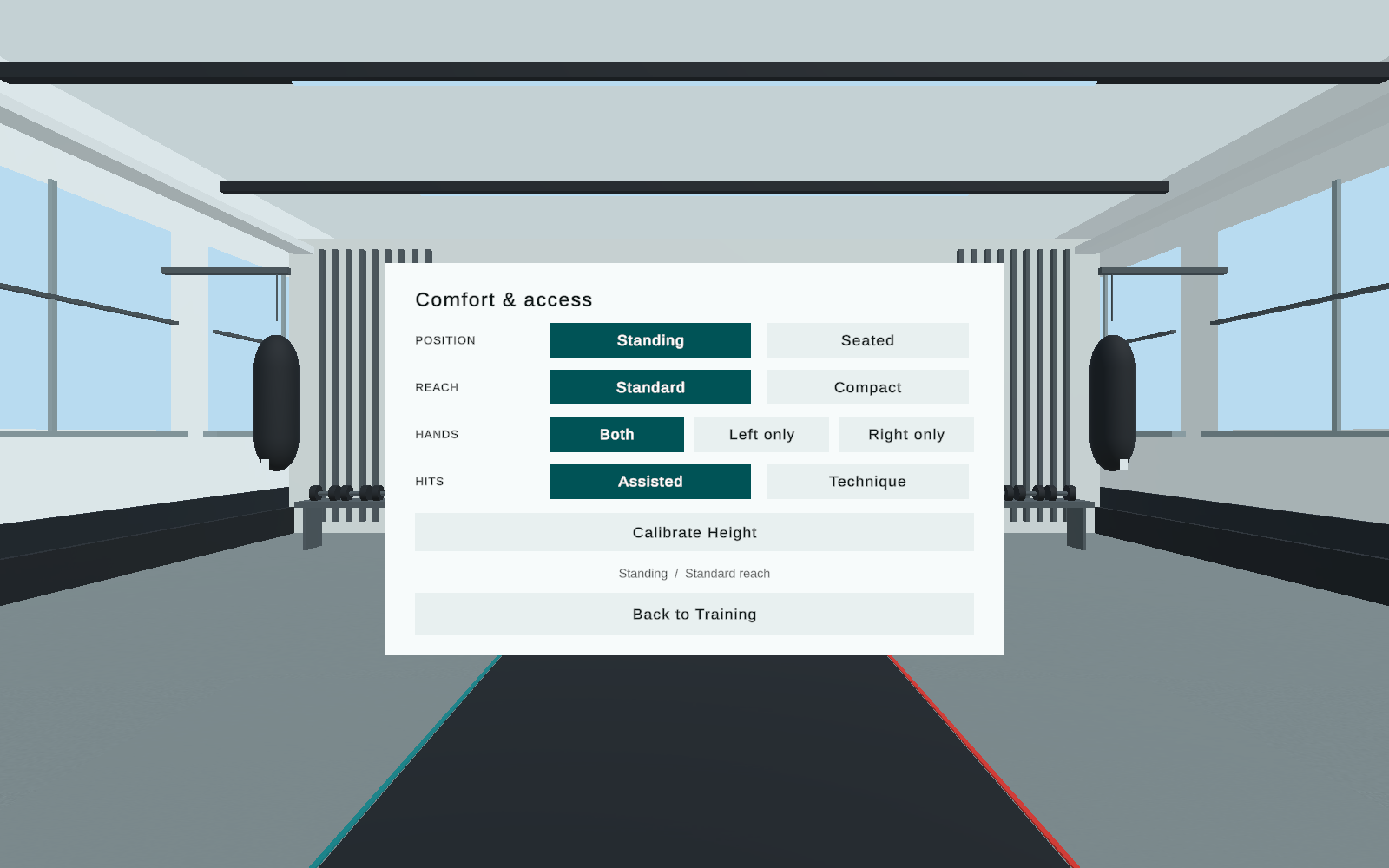
These options let the setup adapt to how someone wants to play. Their presentation and physical fit still need continued review inside the headset as the game develops.
Hits that feel encouraging
The latest update, version 1.8.0, adds graded impact feedback. Registered strikes receive a power score from 0 to 100 and one of four grades: **Building, Solid, Powerful, or Exceptional**. Strike angle and contact accuracy also contribute to awarded points, alongside the existing technique and combo rewards.
!Four Cadence Combat impact grades with cyan, violet, and gold expanding shockwaves
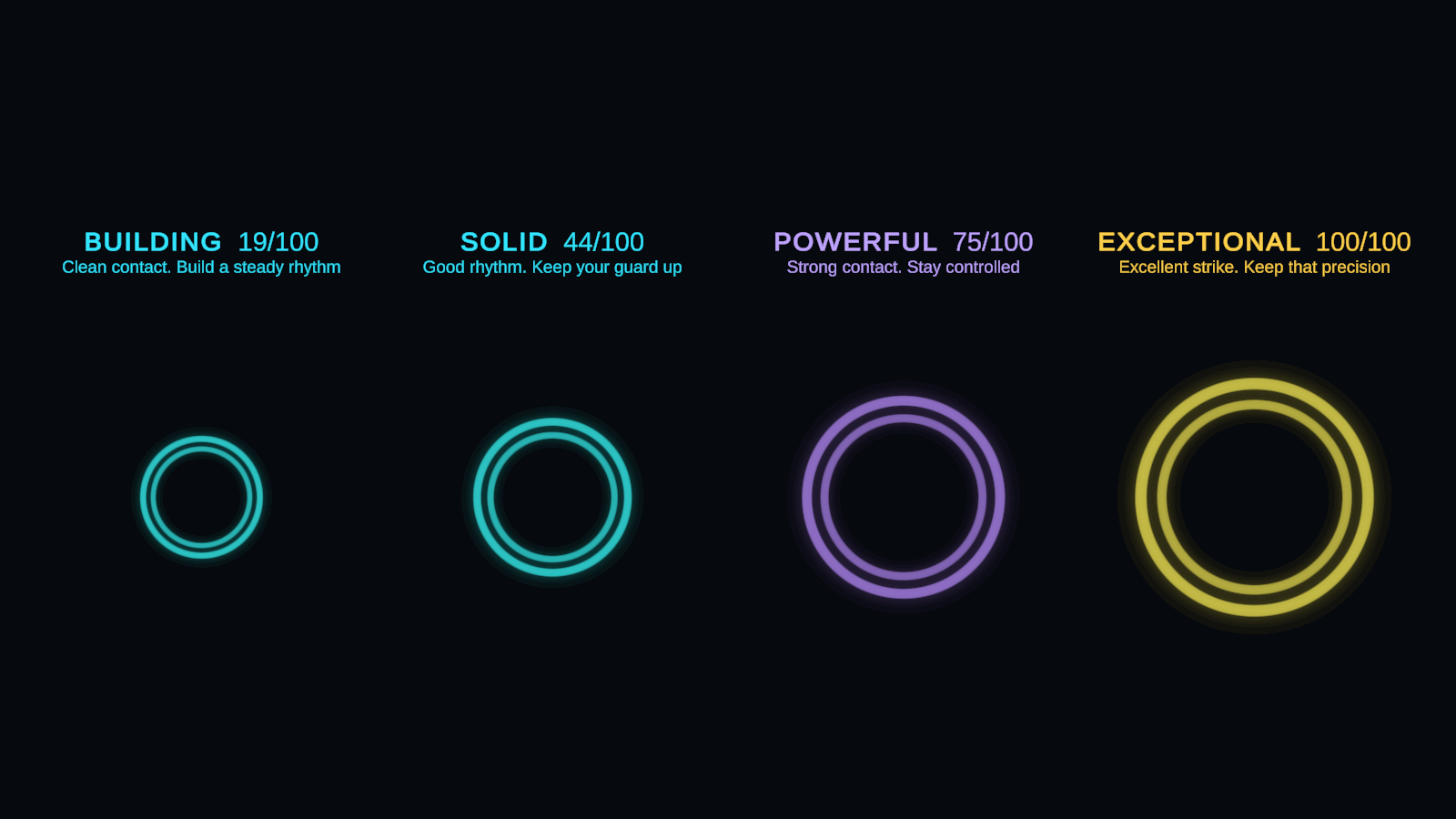
The effects now use expanding shockwave rings in place of the earlier fire bursts. Stronger impacts produce larger rings, with violet for powerful strikes and gold for exceptional ones. Floating feedback can celebrate a new session best or offer a short cue, such as aiming for the centre or maintaining controlled contact.
The session summary carries that progress forward with best impact, average impact, and best combo. The feedback is intended to recognize good work while giving the player something concrete to improve.
The power value is a **virtual game score**, not a measurement of physical force in newtons. Controllers and optical hand tracking provide movement data; they do not measure a real collision with a bag. The implementation also rejects stale samples and tracking jumps to reduce false high scores.
Keeping the effects lightweight
The shockwaves reuse a fixed pool of eight particle systems, with two particles per system: a maximum of 16, compared with 288 for the previous fire effect. Floating feedback is pooled too, and the target artwork avoids adding real-time lights for each pad.
Those are implementation budgets, not a claim about final headset frame rate. The latest update has passed local tests, Unity Play Mode hit-registration checks, shader checks, and an Android development build. Physical Quest testing of this version's controller punches, bare-hand punches, visual readability, and sustained performance is still outstanding.
Cadence Combat is still in development. The next step is to tune those details in the headset and keep refining the relationship between a clear target, a controlled strike, and a satisfying response. For now, this is a look at the studio and the assets taking shape around it.